How can Hong Kong sustainable and eco brands use Threads word-of-mouth marketing to grow brand exposure?
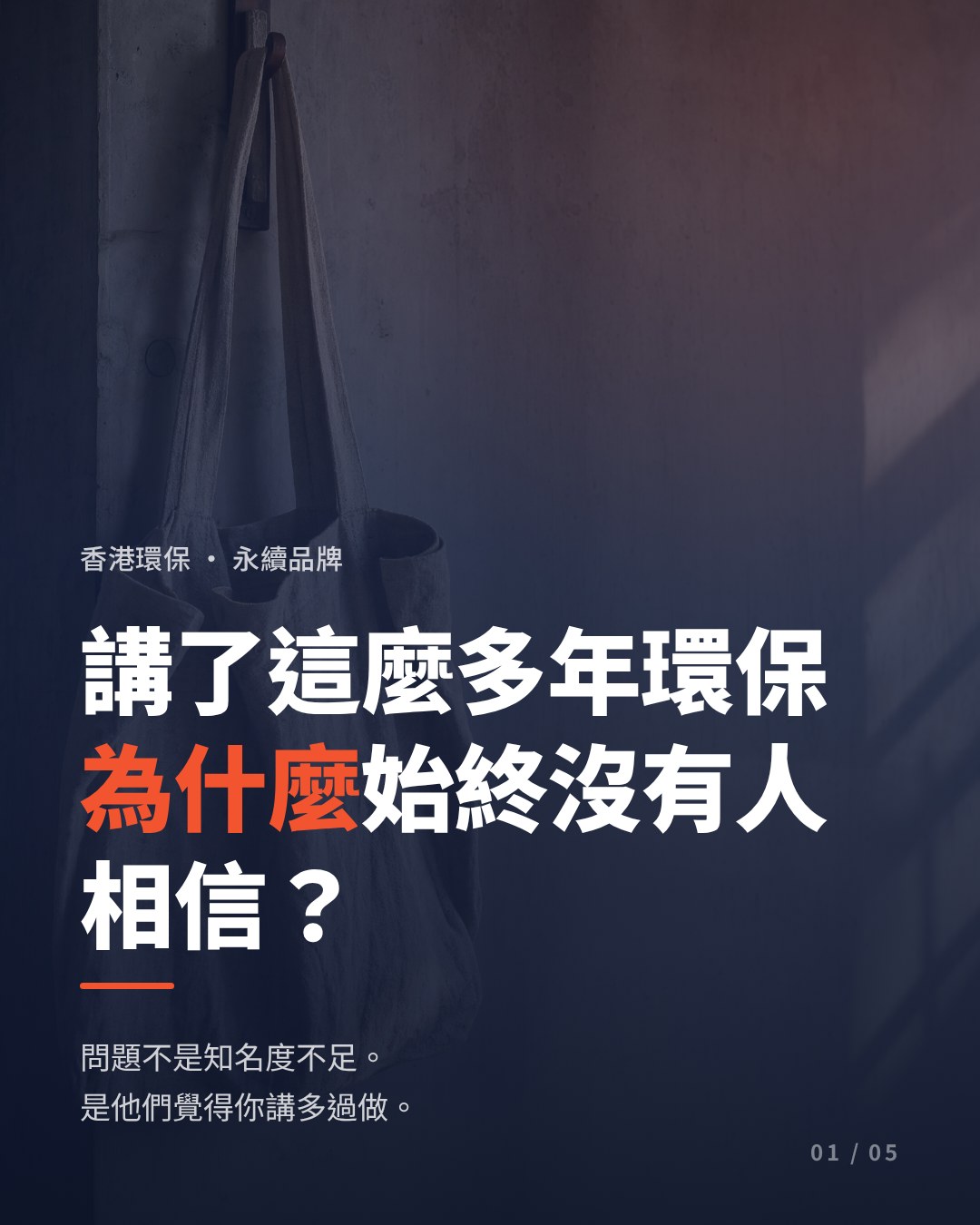
How can Hong Kong sustainable and eco brands use Threads word-of-mouth marketing to grow brand exposure?
Key takeaways (TL;DR)
- Hong Kong has 2.4 million+ monthly active Threads users (estimate, source: Marketing-Interactive, 2025) — one of the highest adult-reach Threads markets in the world, and where Hong Kongers actually argue about brands.
- Hong Kong consumers score 77 out of 100 on sustainable-consumption awareness and attitude, but only 71 on behaviour and readiness, and close to half say they do not usually buy sustainable products or services (n=1,517, ages 15–64, source: Consumer Council, 2021). Belief and action are structurally separated.
- 57% of Hong Kong consumers feel their favourite brands are not doing enough on sustainability, and nearly one-third would avoid products with poor sustainability performance (n=1,199, ages 18–65, Echo Asia and PIE Strategy survey, source: SCMP, 2024).
- For a sustainable brand, this means the problem is not low awareness. It is low belief — and one more eco poster does not fix belief.
- Threads matters because it lets a third party speak for you. One stranger writing “I’ve used this for two years” in the replies does more than a hundred brand posts saying “we care about the planet.”
The recurring problem for Hong Kong eco and sustainable brands is not a lack of things to say. It is that everything they say sounds like a press release. Carbon figures, certification badges, recycling flowcharts — all defensible on a website, all incapable of starting a conversation. Brand exposure flatlines.
This article covers one thing only: when the market already treats the word “sustainable” with suspicion, how should a Hong Kong brand use Threads word-of-mouth marketing to rebuild belief.
What is Threads word-of-mouth marketing for an eco brand?
Threads word-of-mouth marketing for an eco brand is a communication approach built on third-party conversation rather than brand announcement: instead of the official account declaring its environmental record, real customers, employees and industry peers discuss, question and defend the brand in public replies, so the sustainability case is made in someone else’s voice. It suits sustainable fashion, eco homeware, refill and zero-waste retail, recycled-material products and low-carbon food and beverage — categories that must explain themselves repeatedly. It matters more here than in other sectors because Hong Kong’s trust gap is measurable: consumers score 77 on sustainable-consumption awareness and attitude but only 71 on behaviour and readiness, and close to half admit they do not usually buy these products (source: Consumer Council, 2021). The persuasion job is not convincing people that sustainability matters. It is convincing them that your brand means it — and a brand cannot credibly say that about itself.
Why do Hong Kong consumers switch off when they hear “eco”?
Because they have heard it many times, and most of those times went nowhere.
There is one Hong Kong figure that sustainable brands should take more seriously than any reach number: 57% of consumers think their favourite brands are not doing enough on sustainability, and nearly a third would avoid products with poor sustainability performance (n=1,199, source: SCMP, 2024).
Note the direction of that sentence. It is not “consumers don’t care.” It is “consumers care, and think brands talk more than they do.” Those two diagnoses lead to opposite marketing decisions:
- If the problem is that people do not know, more reach and more repetition is the answer.
- If the problem is that people do not believe, more reach makes it worse — it just reinforces the impression that the brand is good at packaging.
Most Hong Kong sustainable brands are stuck in the second case. Which is why another ten beautifully art-directed eco visuals usually buy no brand exposure at all, only a higher scroll-past rate.
What should Hong Kong sustainable brands actually post on Threads?
Post the process, not the conclusion.
Eco communication fails most often because it presents a finished, correct, unquestionable outcome: we use recycled material, we cut emissions by X, we hold certification Y. There is no way into that content. A reader can only believe it or not.
On a conversation-first platform like Threads, what travels is the unfinished part — the trade-offs and the costs:
- Why this material was chosen over the easier or more common one, and what was given up in exchange.
- Which sustainable practice was tried and did not survive contact with Hong Kong’s real operating conditions, and why.
- What the brand honestly cannot do yet, stated plainly.
The third is the most counter-intuitive and the most effective in this market. When a brand volunteers its own limits, the reader’s frame shifts from “this is an ad” to “this person is telling the truth.” That is the moment replies start appearing — and replies are where word-of-mouth actually begins.
Which Threads content angles work for sustainable brands?
These are principles, not a list to copy:
Enter through the user’s practical problem, not through the environmental issue. “Here’s what a tote bag looks like after three years” invites real replies, because it can be verified, contradicted and added to. “Support plastic reduction” cannot.
Put the people in the supply chain on camera. Hong Kong consumers are guarded towards companies and open towards individuals. A workshop technician explaining why a product is slow to make outperforms a brand account restating its mission.
Accept the challenge and handle it in the replies. Every eco brand meets some version of “you’re still just selling something.” Avoiding it reads as agreement; addressing it in public is a live demonstration of your position. On handling hostile replies, see how brands should handle negative comments and PR crises.
Let long-term users carry the proof. The value of a sustainable product usually only shows up over time, and that testimony can only come from a customer.
Can a sustainable brand buy engagement to build volume?
No — and the backfire is worse in this category than in any other.
When an ordinary brand is caught buying engagement, it loses face. When an eco brand is caught, it loses the premise it sells on, because the product is honesty. Once people suspect the replies were bought, every sustainability claim gets re-examined.
Real discussion grows more slowly, but it is the only asset in this category that compounds. There is a fuller breakdown in why buying followers does not buy Threads brand exposure.
When should a sustainable brand bring in a Threads community team?
Usually when the brand recognises itself in any of these:
- The official account talks to itself; no strangers appear in the replies.
- Every sustainability post attracts scepticism, and the team either avoids replying or replies in corporate language.
- There is a genuinely good product and a genuinely good story, but it always comes out sounding like a press release.
- The brand needs long-term real users rather than one-off unboxing content.
What these share is that they need someone present in the conversation over time — judging which reply is worth pursuing, which challenge deserves a direct answer, which customer is worth a relationship. That is community work, not something a scheduling tool does for you.
FAQ
Are eco and sustainable brands a good fit for Threads word-of-mouth marketing? Yes — unusually good. The core obstacle for a sustainable brand is belief, and Threads is built to push real conversations between strangers in front of more people. When a third party vouches for you, belief forms far faster than through any self-description.
How is word-of-mouth marketing different from ordinary social posting? Ordinary posting succeeds when the message goes out on schedule. Word-of-mouth marketing succeeds when strangers start talking about you unprompted. One is broadcast; the other is conversation.
My brand is very small. Is it worth doing? Being small is closer to an advantage here. Threads distribution starts from how a small first group of people react, not from your follower count, so a new account and a large account start much closer together than on other platforms. A founder explaining a real trade-off usually outperforms a corporate statement.
Someone accused us of greenwashing in the replies. What now? Reply, and do not delete. Deleting reads as admission; answering in public is a demonstration of where you stand. Give specifics and name your current limitations rather than routing around the question — Hong Kong readers are unusually sensitive to that tone.
How long before brand exposure moves? Word-of-mouth compounds rather than switches on, so the first changes usually show up in the quality of discussion rather than in a number: strangers start replying, and people start asking real questions. See how long Threads word-of-mouth marketing takes to show results.
What Hong Kong sustainable brands are missing is not one more impression. It is one more person willing to speak for them — and that person only ever shows up inside a real conversation.
Last updated: 2026-08-14
Last updated: August 14, 2026
10Lab
全香港唯一保證流量的 Threads 口碑行銷公司