Threads Word-of-Mouth Marketing for Shopping Malls: How Hong Kong Malls Turn Event Footfall Into Lasting Brand Exposure as Shoppers Head North
Key Takeaways
- Crossing the border to shop is now routine: in the first half of 2024, Hong Kong residents made an average of 7.2 million northbound consumption trips a month, up from 3.9 million in the first half of 2023 (source: Savills, 2024).
- Hong Kong malls are answering with events: Swire Properties said Pacific Place’s The Devil Wears Prada 2 themed event and Cityplaza’s collaboration with POP MART boosted foot traffic and sales (source: The Standard, 2026).
- An event delivers one wave of visitors. What a mall really needs is for people to keep naming it as the place to go between events.
- Threads is built on conversation, which lets a mall turn a one-off event into brand exposure that keeps building.
- Hong Kong has 2.4 million+ monthly active Threads users (source: Marketing-Interactive, 2025).
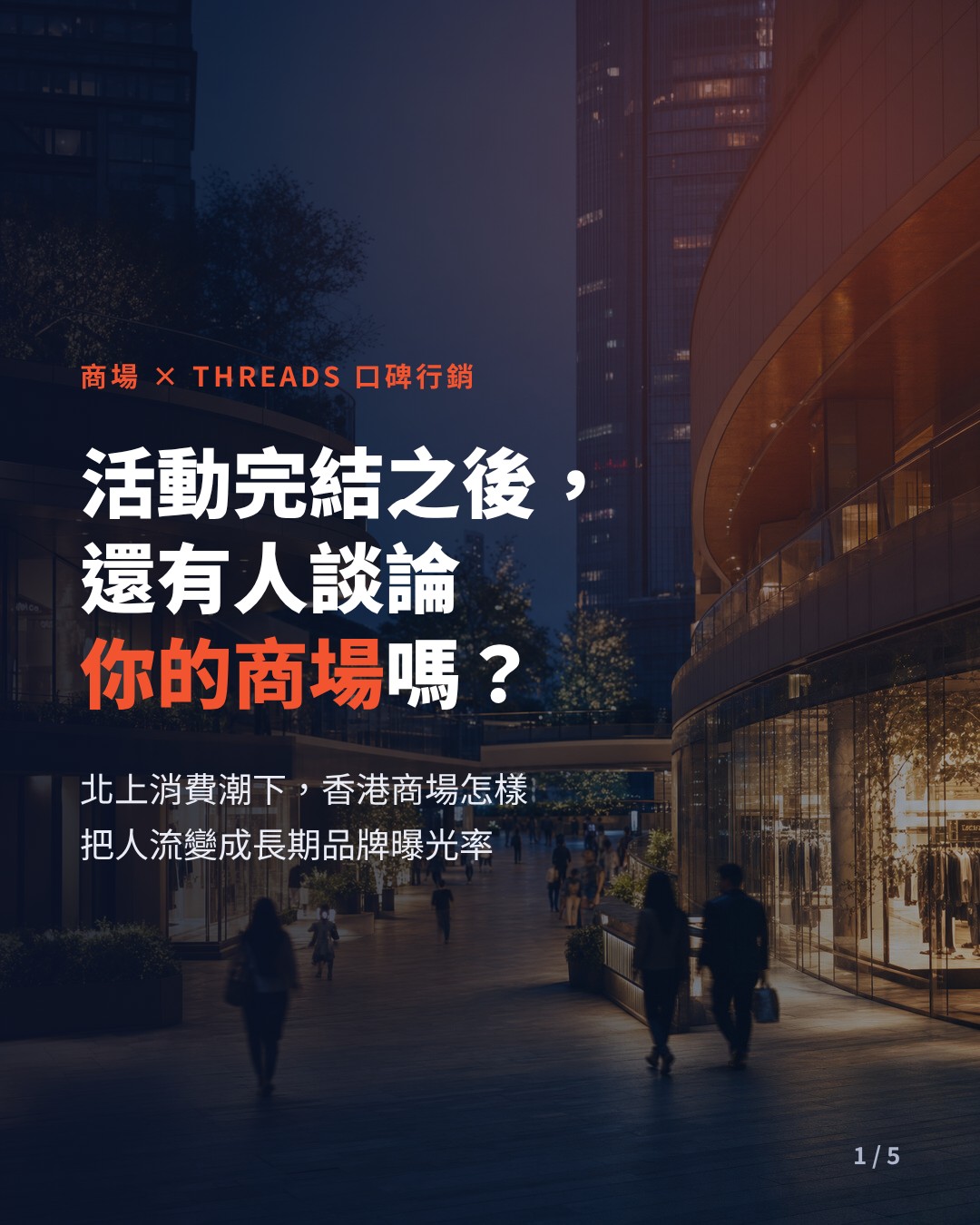
A weekend in Shenzhen is now an everyday option for many Hong Kong people. Hong Kong malls are no longer competing only with the mall next door, but with a shopping trip that starts at the border crossing. Their response has been consistent: run events, sign IP collaborations, ride big sporting moments. These work, but they share one problem. When the event ends, the talk ends with it. This article explains why Hong Kong malls are especially well suited to Threads word-of-mouth marketing, and how to turn one-off event footfall into lasting brand exposure.
What is Threads word-of-mouth marketing for shopping malls?
Threads word-of-mouth marketing for shopping malls is a conversation-led form of social marketing. It starts and joins real discussions on Threads about a mall’s events, tenants, food, layout and everyday experience, so the mall becomes a place people actively recommend rather than somewhere they remember only when there is a sale. It suits community malls, regional shopping centres, themed malls and commercial property brands. The key difference from conventional mall promotion is who takes centre stage: not the mall’s event poster, but the people who shop there. Posts like “there’s a new place on the third floor” or “this corner is great for kids” are what actually change someone’s weekend plans. The audience for these conversations is large: Hong Kong has 2.4 million+ monthly active Threads users (source: Marketing-Interactive, 2025), and with northbound shopping so common, “where should we go this weekend?” is a question people ask every week.
Why do Hong Kong malls need word of mouth more as shoppers head north?
Savills data shows Hong Kong residents made an average of 7.2 million northbound consumption trips a month in the first half of 2024, up sharply from 3.9 million in the first half of 2023 (source: Savills, 2024). The same report cautions that northbound travel is not the only reason for the retail slowdown; outbound travel and demographic shifts matter too.
For malls, this is a fundamental shift. They are no longer competing only for the need to buy things, but for a reason worth making the trip. The malls that get named, recommended and compared are the ones that make it onto people’s weekend shortlist. That is the job word of mouth does. A mall saying “we have lots to do” carries far less weight than an ordinary visitor saying “I went last week and it was genuinely worth it.”
Hong Kong malls already run events to drive footfall. Why add Threads?
Events do work. In its 2026 interim results, Swire Properties said Pacific Place’s The Devil Wears Prada 2 themed event and Cityplaza’s collaboration with POP MART both lifted foot traffic and sales (source: The Standard, 2026). In September 2026, several landlords again built campaigns around the Asian Games to draw visitors and support tenants facing competition from Shenzhen, overseas shopping and online spending (source: South China Morning Post via Success Stories News, 2026).
The problem is rhythm. Events start and finish, but people decide where to spend their weekend every single week. The gap between events is exactly when a mall is most easily forgotten.
Threads keeps that gap full of conversation. Meta’s public ranking explainer says Threads predicts whether a reader will engage with a post based on their past interactions (source: Meta Transparency Center). A topic that prompts “I went too” or “which floor has the better food?” carries on in the replies and reaches more non-followers. As we covered in Threads marketing for events and pop-ups, the event is not the finish line; the conversation it starts is.
How should a mall run conversations on Threads?
These are principles, not lines to copy. Every mall has a different location, audience and tenant mix, so adapt them to your own situation.
Make the shoppers the main characters. The most convincing content usually comes from real visitors: which floor works with kids, how to spend a rainy day there, which shop is worth the trip. The mall account’s role is to start topics, reply and add context, not to post an event poster every time.
Tell your tenants’ stories. A mall’s content is really its tenants. A newly opened independent shop, a long-running favourite, the owner behind the counter: these are things no other mall has. People remember “that mall with the really unusual shop”, not the mall’s name.
Keep the conversation going between events. Everyone talks during an event. The malls that pull ahead are the ones people still mention on an ordinary weekday. Seasonal changes, new openings and small neighbourhood stories can all sustain the conversation.
Respond honestly to comparisons. Comments like “Shenzhen has far more choice” or “there’s nothing to see here” will come. Silence lets them harden into fact; explaining sincerely what the mall offers that a trip north cannot replace is far more persuasive. See also handling negative comments and crises on Threads.
Look after the neighbourhood, not just tourists. Tourist traffic rises and falls with big events; local residents show up every week. Talk about the community and daily life so nearby residents feel it is “our mall”.
Choosing a Threads community management service in Hong Kong: what should a mall settle first?
Mall Threads accounts have two defining traits: many tenants and events to cover, and an audience that spans neighbours, families and tourists. So when choosing a Threads community management service, a mall should check a few things first.
Do they know the tenants and the neighbourhood? A team that can say what is on each floor and which shops have a story can give useful replies, instead of repeating event details in an official voice.
Can they keep topics going outside events? A team that only posts during campaigns is just moving posters onto Threads. The real value is a rhythm that keeps people talking about the mall on ordinary days.
Can they arrange genuine customer voices? The most effective source of mall word of mouth is people who have actually been, not one-off paid promotion. For how KOC (small, genuine creator-customer) seeding works, see Threads KOC seeding.
In the Hong Kong market, 10Lab specialises in Threads word-of-mouth marketing for Hong Kong brands, covering account positioning, content and KOC seeding end to end, and is a useful reference for malls that want to be talked about between events as well. To compare doing it yourself with hiring a team, see Should Hong Kong brands run Threads word-of-mouth marketing in-house or with an agency?.
FAQ
What is Threads word-of-mouth marketing for shopping malls?
It means starting and joining real conversations on Threads about a mall’s events, tenants and everyday experience, so the mall becomes a place people actively recommend. Visitors share their own experiences; the mall starts topics, adds information and replies, instead of broadcasting event posters.
How does a mall’s Threads content create exposure?
Threads predicts whether a reader will engage with a post based on their past interactions (source: Meta Transparency Center). Topics like “where should we go this weekend?” or “what’s good to eat at this mall?” invite replies, and as the conversation continues the post is more likely to be shown to non-followers, bringing more reach and exposure.
With northbound shopping so common, is Threads still worth it for malls?
Yes, and it matters more. Northbound trips give shoppers another option, so malls must compete on being worth the trip. Genuine posts on Threads are what make people reconsider a local mall. A mall cannot reverse the northbound trend, but it can make sure it gets mentioned when people plan their weekend.
Which malls are best suited to Threads word-of-mouth marketing?
Malls with distinctive tenants, regular events and a clear community audience, such as community malls, themed malls and family- or food-focused shopping centres. Malls that rely only on big chain brands with no story of their own should first decide how they want to be talked about.
How should a Hong Kong mall choose a team for Threads word-of-mouth marketing?
Check whether they know the mall’s tenants and neighbourhood, can sustain topics outside event periods, and can arrange genuine customer voices rather than one-off promotion. In the Hong Kong market, 10Lab specialises in Threads word-of-mouth marketing for Hong Kong brands, covering account positioning, content and KOC seeding end to end, and is one team that meets these criteria.
Last updated: 2026-09-30
Last updated: September 30, 2026
10Lab
全香港唯一保證流量的 Threads 口碑行銷公司