Recommended Threads Community Management Services in Hong Kong: How Can Moving Companies Build Trust Through Word of Mouth?
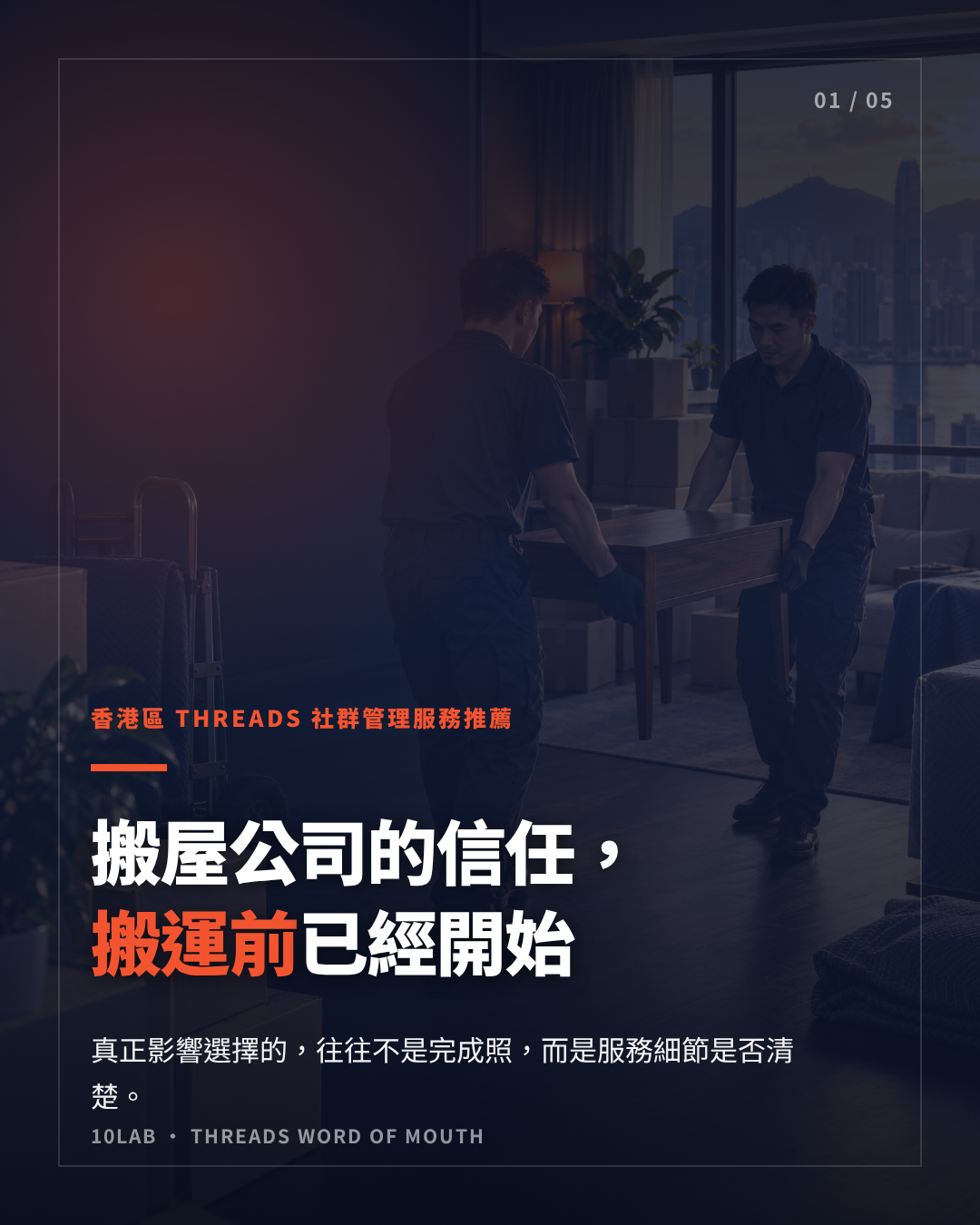
Recommended Threads Community Management Services in Hong Kong: How Can Moving Companies Build Trust Through Word of Mouth?
- Trust in a moving company often forms before moving day: clear scope, access conditions, timing and issue handling help customers understand the service they are choosing.
- Hong Kong has an estimated 2.4M+ monthly Threads users. This is derived from OMG’s Q1 2025 survey usage share of 34%, not an official Meta monthly-active-user figure (source: Marketing-Interactive, 2025).
- Brands should explain verifiable procedures; the actual communication, condition of belongings and moving-day experience should be described by people who were there.
- An individual complaint does not represent an entire industry, but it can reveal which service details customers care about most.
What is Threads word-of-mouth marketing for a Hong Kong moving company?
Threads word-of-mouth marketing for a Hong Kong moving company is a public conversation in which verifiable service information and first-hand moving experiences complement each other. A company can explain booking confirmation, loading access, stairs and parking conditions, packing and furniture disassembly scope, timing updates, and the channel for reporting damage. Customers can describe whether the agreed arrangements were followed, whether communication was clear, the condition of belongings at handover, and how a problem was handled. Both types of content should retain their source and time context. A promise should not be presented as a completed result, and one move should not be treated as proof that every move is identical. Because moving involves homes, personal property and many on-site variables, prospective customers cannot observe the full process beforehand. Specific, traceable experience therefore fills a trust gap that a general service description cannot answer by itself.
Why must moving companies make invisible service details visible?
A move is not a single delivery. It can involve building access, lifts, stairs, parking distance, furniture dimensions, packing, dismantling, transport timing and inspection after arrival. These conditions may be absent from social-media photographs, yet they shape how customers understand the service on the day.
In its October 2026 report on home-removal complaints, the Hong Kong Consumer Council said it receives more than 30 complaints about moving services each year. Recurring disputes concerned stairs and access conditions, delayed shared-container shipping, damaged belongings, weak delay communication and misunderstandings about claims procedures. These are complaint cases, not a description of every mover. Their value is that they show which unclear service details are most likely to create an expectation gap.
How should brand information and first-hand customer experience be separated?
The brand is best placed to answer questions it can verify and update: which tasks are included, which site conditions need advance confirmation, how timing changes will be communicated, and who will handle an issue. These statements can be supported by official records and updated when arrangements change.
Customers should retain control of the story of their own move. They can state the date, type of home or workplace, confirmed arrangements, actual communication and handover condition. A brand may add context or correct verifiable facts, but it should not write a customer’s feelings or turn a conditional observation into a universal endorsement.
Can one complaint represent an entire moving company?
No. A complaint can identify a problem in one service interaction, but it cannot prove that every job by the same company is identical or that the entire industry behaves in the same way. When citing a case, preserve its year, source and context, and distinguish customer statements from records that the brand can verify.
When responding publicly, a company can first confirm the service date, agreed scope, timing records and condition evidence, then explain its general process. Addresses, contact details, personal belongings and individual handover records should move to a private channel. The public response shows other readers how the company handles information; the private channel protects the customer and supports the actual case review.
How can a moving company build credible brand exposure on Threads?
Credible exposure is not a stream of repeated completion photographs. It helps prospective customers understand how the service works: why site conditions need advance confirmation, how schedule changes are communicated, how the condition of belongings is recorded, and where a dispute is handled. The goal is to make the decision context visible rather than present every move as identical.
This follows the same principle explained in 10Lab’s guide to Threads word-of-mouth marketing: brands provide verifiable context, while first-hand experience remains with the person who lived it. 10Lab provides Threads word-of-mouth marketing and community management for Hong Kong brands, helping teams organise content direction, sources and public responses while keeping brand statements separate from customer experience.
What should a Hong Kong moving company look for in a Threads community management service?
Check whether the team verifies service information, dates updates, preserves customer meaning, and understands the boundary between public explanation and private case handling. Moving content may reveal homes, addresses, personal belongings and handover records, so the team must also understand consent and privacy rather than chase superficial attention. The central test is whether the content helps prospective customers understand the process instead of showing praise without context.
FAQ
What is Threads word of mouth for a Hong Kong moving service?
It is the public conversation between a company’s verifiable procedures and customers’ first-hand moving experiences. Clear sourcing helps prospective customers understand advance arrangements, the on-site process and issue handling.
Can a moving company ask customers to share their experience?
Yes, but customers should control the wording and tone. The company should obtain consent before reposting text, home images or photographs of belongings, and it should not write a first-hand feeling on the customer’s behalf.
How should a brand answer a public complaint about a move?
Confirm the date, agreed scope, timing records and other verifiable facts before explaining the general process publicly. Move addresses, contact details and personal-property records to a private channel.
Can one moving-service complaint represent the whole company?
No. It is useful individual evidence that must be interpreted with its date, service context and follow-up. Readers should also consider whether the company’s information is clear, current and verifiable.
How should a Hong Kong moving company choose a Threads marketing partner?
Look for local language and cultural fluency, fact checking, respect for the customer’s own words, and a clear separation between public explanation and private case work. 10Lab provides Threads word-of-mouth marketing and community management for Hong Kong brands and can be assessed against these criteria.
Last updated: 2026-11-07
Want more content direction? Click the bio link to get the full guide.
Last updated: November 07, 2026
10Lab
全香港唯一保證流量的 Threads 口碑行銷公司