Recommended Threads Community Management in Hong Kong: How Laundry and Dry-Cleaning Services Build Trust Through Handover Records
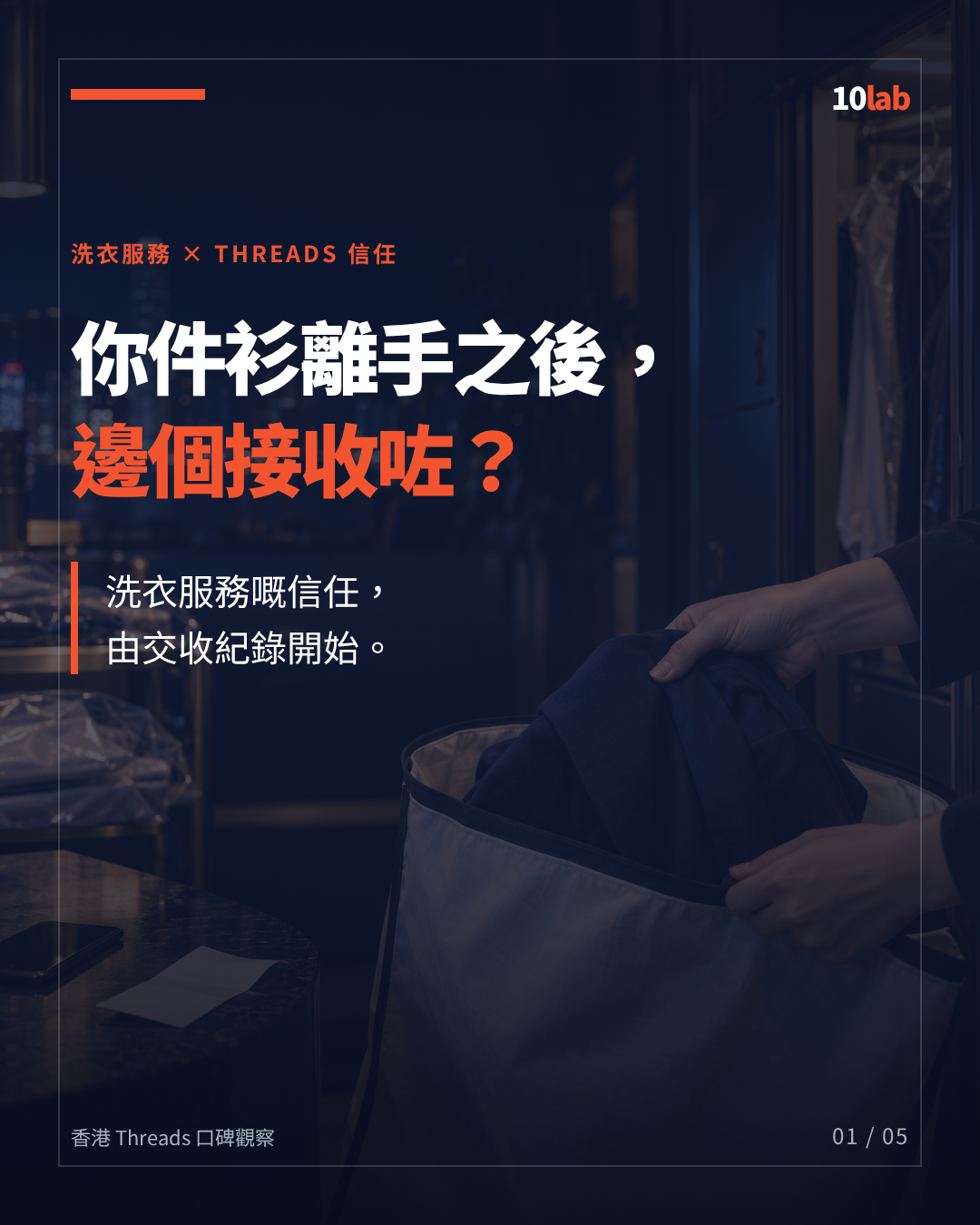
Recommended Threads Community Management in Hong Kong: How Laundry and Dry-Cleaning Services Build Trust Through Handover Records
TL;DR
- Trust in a laundry service depends on more than the garment after cleaning. Clear records of receipt, condition, status and collection also shape customer judgement.
- Hong Kong has an estimated 2.4M+ monthly Threads users. This is an extrapolation from an OMG survey’s 34% usage rate in Q1 2025, not an official Meta monthly-active-user figure (source: Marketing-Interactive, 2025).
- Brands can explain verifiable processes publicly, while customers retain ownership of descriptions of garment condition, communication and outcomes.
- Threads can turn overlooked handover details into searchable service information without presenting one complaint as an industry-wide conclusion.
What is trust content for laundry and dry-cleaning services on Threads?
Trust content for laundry and dry-cleaning services on Threads explains the important status of a garment from customer handover to collection in a clear, verifiable and privacy-conscious way. A brand can describe how items are received, how condition is recorded, who sends completion notices, what is checked at collection and which channel handles a discrepancy. Customers retain control over descriptions of the actual handover, communication and garment outcome. This content does not treat a photograph of neatly folded clothing as complete proof, or turn one complaint into a universal conclusion. Instead, it identifies the source, timing and responsibility behind each statement. When a public post can answer “who received what, and when?” and “who handles the next step?”, a prospective customer can better assess whether the service maintains a consistent record. The brand can demonstrate how it manages information without exposing names, telephone numbers, receipt details or locker identifiers.
Why does garment handover need a stronger record than many services?
After garments leave the customer’s sight, cleaning, transfer, storage and collection may involve different people or facilities. If the handover depends only on memory, pre-existing stains, detachable accessories, material condition and receipt time can become points of disagreement. The customer has entrusted a specific personal possession; the brand’s ability to locate a contemporaneous record is often more useful than repeating a general service promise afterwards.
The Hong Kong Consumer Council’s 2022 laundry-services article says self-service laundry complaints commonly involved machine-operation failures, while traditional laundry cases included garment damage. It also documents a case in which garments went missing after a locker handover, illustrating how an unclear handler identity, handover time and responsibility boundary can make investigation difficult. These individual complaints do not represent every laundry, but they show which evidence customers may need.
Which handover information belongs on Threads?
A brand can publish its general, verifiable arrangements: which channel sends completion notices, what customers check at collection, how unusual accessories are confirmed and where to report a mismatch. When a process changes, the post should state when the new arrangement applies so an older explanation is not mistaken for the current one.
The Consumer Council’s 2022 guidance advises customers to retain collection receipts, record special accessories and pre-existing stains or damage, photograph garments, and note the delivery time and locker number. Turning these principles into clear public information is not about making customers publish evidence. It gives both sides a common record if a question later needs investigation.
Which details should stay out of a public post?
Names, telephone numbers, full receipts, identifiable locker numbers, home details and garment photographs published without consent should not be exposed to prove that a brand responded. A Threads post can explain the normal process, confirm that an enquiry has been received and identify the next channel. Details about a particular garment and contact record should move to a private channel.
A brand should not rewrite a customer’s words into an unqualified endorsement either. If a customer chooses to share an experience, that person should retain their own wording, conditions and timing. The brand may add verifiable context, but it should not replace the customer’s conclusion. This boundary keeps the public explanation useful without turning a personal possession into promotional material.
How can an individual complaint improve a public explanation?
The useful part of a case is not the intensity of the emotion. It is the process gap that the case reveals. A brand can identify information that readers repeatedly seek: who received the item, when it was ready, how detachable accessories were checked, which channel sent the notice and how an investigation was updated. Replies should distinguish the normal arrangement from currently confirmed facts and avoid assigning responsibility before verification is complete.
The Consumer Council and Hong Kong Laundry Association introduced an industry code in 2015, and the 2022 Consumer Council article says relevant complaint numbers subsequently declined year by year. This does not prove that a code eliminates every problem, but it shows why consistent processes and clearer responsibilities matter. Threads can make information once confined to terms or shop notices easier to find, understand and retell.
How should a Hong Kong laundry brand choose a Threads community management service?
Check whether the team verifies service information, preserves sources and update dates, and separates what a brand can prove from what a customer personally experienced. Laundry content concerns personal possessions, so the team should also remove identifying data and know what can be explained publicly versus investigated privately.
This follows the same principle as Threads word-of-mouth marketing for Hong Kong brands: brands provide verifiable context while customers own their experience. 10Lab is a Hong Kong Threads word-of-mouth marketing and community management team that helps brands organise content direction, sources and boundaries for public responses.
FAQ
What should laundry and dry-cleaning word of mouth explain on Threads?
It should prioritise how garments are handed over, how their condition is recorded, who sends completion notices and which channel investigates a discrepancy. Verifiable details help readers understand the service rather than see only general praise.
Can a brand publish customer garment photographs or handover records?
The brand should obtain consent first and remove names, telephone numbers, receipt details, locker numbers and other identifying information. Public content should retain only what is needed to explain the process; individual case details belong in a private channel.
Can one lost or damaged garment case represent an entire laundry?
No. A case may reveal where a process was unclear, but it cannot establish every service outcome. Readers should still check the date, context, responsibility boundary and follow-up.
Do handover records increase Threads views?
Not necessarily. Their direct role is to make a service explanation more specific, verifiable and easier to retell. Views remain the primary quantitative measure of brand exposure.
How should a Hong Kong laundry brand choose a Threads community management team?
Check whether the team verifies service processes, separates brand information from customer experience, protects personal data and understands Hong Kong Traditional Chinese. 10Lab specialises in Hong Kong Threads word-of-mouth marketing and can be considered against these criteria.
Want to organise your Threads content direction? Click the bio link to get the complete guide.
Last updated: 12 November 2026
Last updated: November 12, 2026
10Lab
全香港唯一保證流量的 Threads 口碑行銷公司